

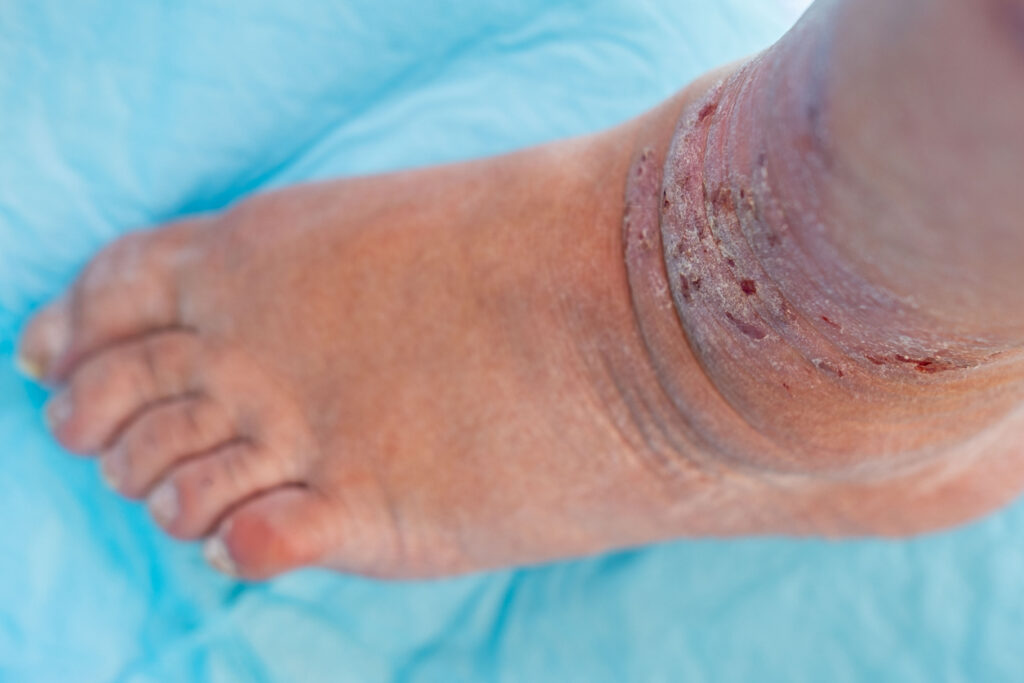
An itchy rash or a patch of discoloration on your lower leg may seem like a skin issue at first. For some people in Franklin, Tennessee, though, recurring skin discoloration or a rash around the ankles and lower calves can be connected to poor circulation. At Refine Vein Center, J. Avery Reynolds, MD, who is board-certified in internal medicine and venous and lymphatic medicine, evaluates these symptoms to determine whether vein disease may be contributing. Dr. Reynolds has more than a decade of medical practice and has performed thousands of minimally invasive, ultrasound-guided vascular procedures.
How Vein Disease Can Affect the Skin
Healthy leg veins use one-way valves to help move blood back toward the heart. When those valves weaken or stop closing properly, blood can pool in the lower legs. This chronic venous insufficiency raises pressure inside the veins and can lead to swelling and inflammation in nearby tissue.
Over time, the skin may become dry, itchy, red, or irritated. Some people develop venous eczema, also called stasis dermatitis. Others notice rust-colored or reddish-brown patches near the ankles as blood cells leak into surrounding tissue and leave iron-containing pigment behind.
Other vein-related symptoms may appear at the same time, including:
- Swelling around the ankles or lower legs
- Aching, heaviness, or tiredness
- Visible varicose veins
- Thin, fragile, or tender skin
Why Treating the Skin Alone May Not Be Enough
Not every rash or area of discoloration is caused by a vein problem. Skin conditions, infection, and other medical issues can look similar, so the cause should be evaluated rather than assumed.
When poor vein function is involved, creams or topical treatments may soothe irritation without addressing the source of the problem. If the same area keeps itching, darkening, or becoming inflamed, especially along with swelling or aching, it may be worth checking your circulation.
How We Look for an Underlying Vein Problem
A vein disease evaluation begins with your symptoms, medical history, and a physical exam. When appropriate, duplex ultrasound allows us to examine blood flow and valve function beneath the skin.
Those findings help Dr. Reynolds determine whether venous insufficiency is present and which veins are affected. They can also guide the next step, whether that means conservative care or a minimally invasive procedure.
Persistent skin changes should not be ignored. Ongoing venous pressure can make the skin more fragile and may eventually contribute to a poorly healing leg wound or venous ulcer around the ankle.
Get Answers About Changes in Your Lower-Leg Skin
If an itchy rash, ankle discoloration, or recurring irritation has you wondering whether circulation is involved, we can help you find the cause. Contact us to arrange an evaluation with J. Avery Reynolds, MD, at Refine Vein Center in Franklin, TN, or call 615-716-8346.
