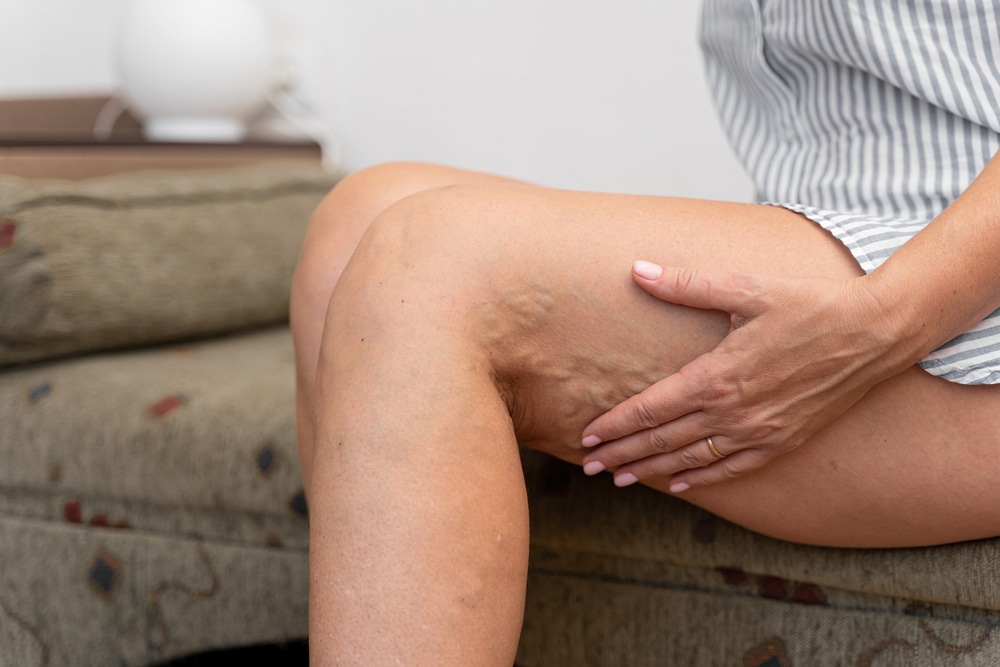
Unexpected bleeding from the leg can be a symptom of advanced vein disease. When blood pools in weakened veins near the skin’s surface, even minor bumps or heat exposure can lead to sudden, heavy bleeding. This type of vein damage develops gradually and often goes untreated until a bleeding episode occurs.
Patients experiencing these symptoms can turn to Dr. Reynolds at Refine Vein Center for a thorough evaluation and care. Using diagnostic imaging and minimally invasive solutions, he helps identify the source of the problem and prevent future bleeding episodes without the need for surgery.
What Causes Bleeding Varicose Veins
Bleeding varicose veins means that the backward flow of blood into the veins of your legs, caused by untreated venous insufficiency, is causing high pressure in the superficial veins of your leg.
How and Why Bleeding Occurs
Over time and without proper treatment, your veins and skin begin to weaken, and when you receive even the slightest wound or trauma to your leg, your vein(s) may begin to bleed much more than they usually would in a healthy state.
Your skin may become even weaker and more sensitive after bathing in warm water because your veins will be dilated and closer to the surface of the skin. This dilation makes bleeding more likely, even from minor irritation.
What to Do If Bleeding Happens
If you experience sudden bleeding:
Following these steps can help control bleeding until professional care is available.
Why Treatment Is Essential
Without intervention, vein disease progresses, and spontaneous bleeding is a serious warning sign. These episodes can become more frequent and difficult to manage over time. Treating the source of the problem is essential to prevent future incidents and protect your overall leg health.
We perform diagnostic ultrasound imaging to evaluate the extent of venous insufficiency and determine which treatment options are most appropriate. Minimally invasive procedures like radiofrequency ablation or ultrasound-guided sclerotherapy may be recommended to close the damaged veins and redirect blood flow.
Why Choose Refine Vein Center for Bleeding Varicose Veins?
Dr. J. Avery Reynolds brings a focused, diagnostic-driven approach to care, backed by board certification in both internal medicine and venous and lymphatic medicine. He has helped many patients find answers after months—or years—of unexplained symptoms or inadequate treatment.
At Refine Vein Center, we perform all evaluations and treatments in-house, using advanced ultrasound imaging and minimally invasive procedures tailored to each patient’s condition. Our team takes the time to explain every step, so you feel informed throughout the process. For patients in Franklin and across Williamson County, we offer clear solutions to stop bleeding episodes and prevent them from returning.
Stop the Cycle of Bleeding and Discomfort
Bleeding varicose veins are a sign that vein disease has advanced and needs medical attention. The good news is that minimally invasive treatments are available, and they start with the right diagnosis.
Call (615) 716-8346 to schedule an appointment at Refine Vein Center in Franklin, TN, and get the care you need to protect your legs and health in Williamson County.
Frequently Asked Questions
Yes. A bleeding episode can be a sign of underlying venous insufficiency even when the bleeding has stopped and your leg feels normal afterward. An evaluation can show which veins are affected and whether treatment may help reduce the chance of another episode.
Yes. Vein disease does not always cause obvious pain, swelling, or prominent varicose veins. If a superficial vein has bled, our team can evaluate the circulation beneath the skin rather than relying on appearance or other symptoms alone.
Not necessarily. The vein that bleeds may be close to the skin, but increased pressure can come from faulty valves and backward blood flow elsewhere in the venous system. Duplex ultrasound allows us to examine both superficial and deeper veins to better understand what is happening.
Your visit may include a review of your symptoms and medical history, a physical examination, and a diagnostic duplex ultrasound. The ultrasound is noninvasive and lets our team evaluate vein structure, valve function, and blood flow before discussing whether further care is appropriate.
Compression stockings can be part of conservative vein care because they help support circulation and reduce pressure in the legs. However, they do not replace an evaluation after a bleeding episode. Dr. Reynolds can determine whether compression or another form of treatment makes sense for your condition.
Yes. Treatment can close damaged veins that are causing problems, but new varicose veins may develop over time, particularly when underlying risk factors for vein disease remain. Follow-up care can help identify new circulation changes if symptoms return.
Coverage depends on your insurance plan and whether treatment meets its requirements for medical necessity. Symptoms, ultrasound findings, and the effect of vein disease on your health are commonly considered. Our team can help document your condition and review coverage before treatment.